

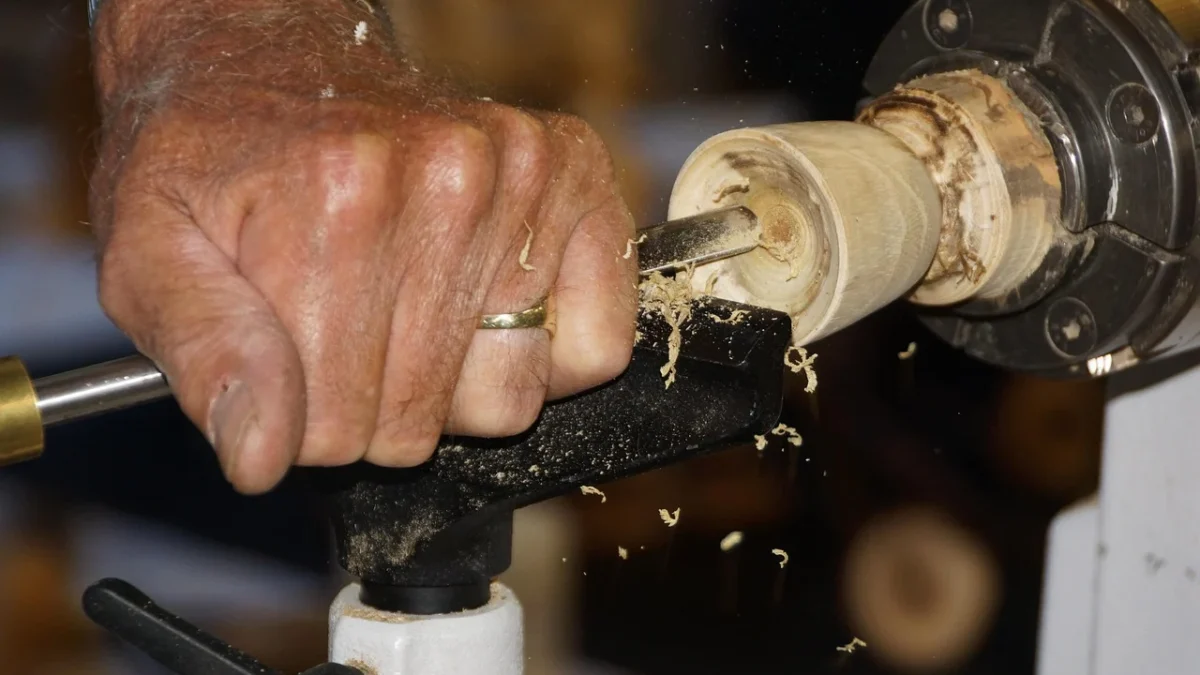
The Disk and Washer Method determines the volume of a solid of revolution by integrating the areas of infinitesimally thin circular or ring-shaped cross-sections. This approach slices the 3D solid, formed by rotating a 2D region around an axis, into disks or washers whose volumes are then summed with an integral.
This guide details both the disk and washer formulas, explains why they work, and demonstrates how to handle rotations about the y-axis or any other line. It also identifies common setup mistakes that often lead to lost points on exams.
Why it works: stacking coins
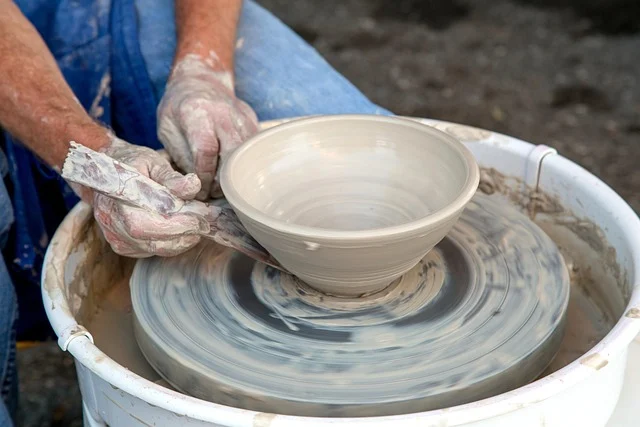
Picture the solid as a stack of very thin coins. A coin of radius \( r \) and thickness \( \Delta x \) is a short cylinder, and its volume is \( \pi r^2,\Delta x \). If the radius changes from coin to coin, add up \( \pi r_i^2,\Delta x \) over all coins. That is a Riemann sum, and letting the thickness shrink to zero turns it into an integral.

More generally, any solid with known cross-sectional area \( A(x) \) has volume
$$V = \int_a^b A(x)\,dx$$
The disk and washer methods are this slicing formula with circular cross-sections: \( A(x) = \pi r^2 \) for a disk and \( A(x) = \pi(R^2 - r^2) \) for a washer.
The disk method
Rotating the region under \( y = f(x) \) from \( a \) to \( b \) about the x-axis, each slice is a disk with radius \( f(x) \) and area \( \pi[f(x)]^2 \):
$$V = \pi\int_a^b\big[f(x)\big]^2\,dx$$
Example 1: a paraboloid
Rotate \( y = \sqrt x \), \( 0 \le x \le 4 \), about the x-axis:
$$V = \pi\int_0^4(\sqrt x)^2\,dx = \pi\int_0^4x\,dx = \pi\cdot\frac{16}{2} = 8\pi \approx 25.13$$
Example 2: a sphere
Rotate \( y = \sqrt{1 - x^2} \) on ( [-1, 1] ):
$$V = \pi\int_{-1}^{1}(1 - x^2)\,dx = \pi\left[x - \frac{x^3}{3}\right]_{-1}^{1} = \frac{4\pi}{3}$$
That’s the familiar \( \frac43\pi r^3 \) with \( r = 1 \).
Example 3
\( y = e^x \) on ( [0, 1] ): \( V = \pi\int_0^1e^{2x}\,dx = \frac{\pi(e^2 - 1)}{2} \approx 10.04 \).
The key step is squaring the radius before integrating: \( (e^x)^2 = e^{2x} \), not \( e^{x^2} \). The resulting integral needs only a quick substitution, since the antiderivative of \( e^{2x} \) is \( \frac12e^{2x} \).
Example 4: deriving the cone formula
A cone of radius \( r \) and height \( h \) comes from rotating the line \( y = \frac rh x \), \( 0 \le x \le h \), about the x-axis. Each disk has radius \( \frac rh x \), so
$$\begin{aligned}V &= \pi\int_0^h\frac{r^2}{h^2}x^2\,dx &= \pi\frac{r^2}{h^2}\cdot\frac{h^3}{3} = \frac13\pi r^2h\end{aligned}$$
That’s the cone formula from geometry, now with a proof. For instance, with \( r = 3 \) and \( h = 6 \) the line is \( y = \frac x2 \) and the volume is \( 18\pi \).
The washer method
However, if the region lies between two curves, the slice has a hole. With outer radius \( R(x) \) and inner radius \( r(x) \):
$$V = \pi\int_a^b\Big(R(x)^2 - r(x)^2\Big)\,dx$$
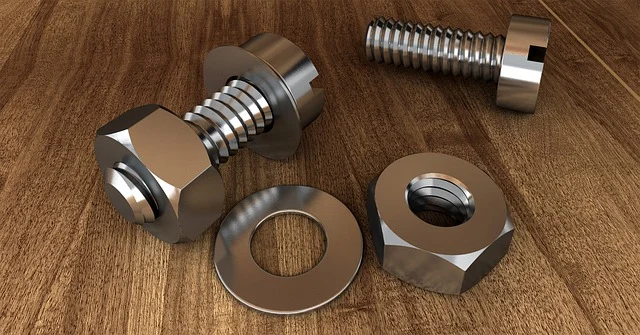
Think of it as the big disk minus the hole: the volume of the outer solid minus the volume of the inner one.
Example 5
First, rotate the region between \( y = x \) (top) and \( y = x^2 \) (bottom), \( 0\le xle1 \), about the x-axis. Outer radius \( x \), inner radius \( x^2 \):
$$V = \pi\int_0^1\left(x^2 - x^4\right)dx = \pi\left(\frac13 - \frac15\right) = \frac{2\pi}{15}$$
Common mistake: writing \( \pi\int(R - r)^2\,dx \). You must square each radius separately, then subtract.
Example 6
Next, region between \( y = 2 \) and \( y = x^2 \), rotated about the x-axis. They meet at \( x = \pm\sqrt2 \):
$$\begin{aligned}V &= \pi\int_{-\sqrt2}^{\sqrt2}\left(4 - x^4\right)dx &= \pi\left[4x - \frac{x^5}{5}\right]_{-\sqrt2}^{\sqrt2} = \frac{32\sqrt2,\pi}{5} \approx 28.43\end{aligned}$$
Rotating about other lines
- About the y-axis: write radii as functions of \( y \) and integrate \( dy \), or use the shell method with \( dx \).
- About \( y = k \): radius = distance to the line, e.g. \( R(x) = f(x) - k \).
The rule that never fails: a radius is always a distance from the axis, so it is “far curve minus axis” or “axis minus far curve,” whichever is positive.
Example 7: about the line y = −1
Rotate the region between \( y = x \) and \( y = x^2 \), \( 0 \le x \le 1 \), about \( y = -1 \). The axis lies below the region. The top curve \( y = x \) is farther from the axis, so \( R = x - (-1) = x + 1 \), and the inner radius is \( r = x^2 + 1 \).
$$\begin{aligned}V &= \pi\int_0^1\Big[(x + 1)^2 - (x^2 + 1)^2\Big]dx &= \pi\int_0^1\left(2x - x^2 - x^4\right)dx &= \pi\left(1 - \frac13 - \frac15\right) = \frac{7\pi}{15}\end{aligned}$$
Compare with Example 5: the same region gives a larger solid because it now sits farther from the axis.
Example 8: about the line y = 2
Now rotate the same region about \( y = 2 \), which lies above it. The curve farther from the axis is now the lower one, \( y = x^2 \). So \( R = 2 - x^2 \) and \( r = 2 - x \):
$$\begin{aligned}V &= \pi\int_0^1\Big[(2 - x^2)^2 - (2 - x)^2\Big]dx &= \pi\int_0^1\left(x^4 - 5x^2 + 4x\right)dx &= \pi\left(\frac15 - \frac53 + 2\right) = \frac{8\pi}{15}\end{aligned}$$
Notice how the roles of the curves swapped. Also, outer and inner depend on the axis, not on which curve is on top.
Example 9: washers in y, about the y-axis
Rotate the region between \( y = x \) and \( y = x^2 \) about the y-axis. Slices perpendicular to the y-axis are horizontal, so solve each curve for \( x \): \( x = y \) and \( x = \sqrt y \). For \( 0 < y < 1 \), \( \sqrt y > y \), so \( R = \sqrt y \) and \( r = y \):
$$V = \pi\int_0^1\left(y - y^2\right)dy = \pi\left(\frac12 - \frac13\right) = \frac\pi6$$
The shell method gives the same \( \frac\pi6 \) with \( 2\pi\int_0^1 x(x - x^2)\,dx \), a good way to check your work.
Setup checklist
- Sketch the region and the axis.
- Draw one slice perpendicular to the axis.
- Identify outer and inner radius (inner = 0 for disks).
- Find the limits (intersection points; see area between curves).
- Integrate \( \pi(R^2 - r^2) \).
Common mistakes
- Squaring the difference. \( (R - r)^2 \) is not \( R^2 - r^2 \). In Example 5, the wrong setup gives \( \frac{\pi}{30} \) instead of \( \frac{2\pi}{15} \).
- Using a height instead of a distance. When the axis is \( y = k \), the radius is \( f(x) - k \) or \( k - f(x) \), never just \( f(x) \).
- Mixing variables. A slice perpendicular to the y-axis has thickness \( dy \), so radii and limits must be in \( y \).
- Swapping outer and inner. If your volume comes out negative, the radii are reversed. So, pick the curve farther from the axis as \( R \).
- Forgetting the gap. If the region does not touch the axis, you need a washer even when there is only one curve; the inner radius is the gap to the axis.
Where it’s used
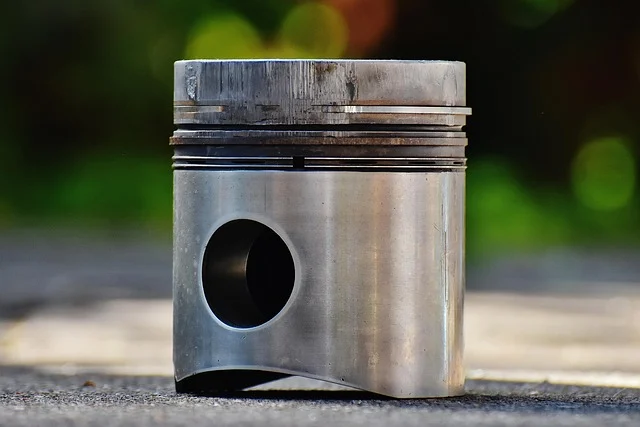
Volumes of revolution show up whenever an object is round in cross-section: tanks, bottles, lenses, pistons and machined parts. Engineers use the same integral to find how much liquid a curved tank holds at each depth. The slicing idea \( V = \int A(x)\,dx \) also works for non-round cross-sections such as squares or triangles, and it generalizes to double integrals for solids under a surface.
Disk method calculator
The full disk method calculator shows the integral it builds and explains how to handle washer problems with two runs.

Practice problems
Try these before checking the answers.

- \( y = x^2, 0\le xle 1 \text{ about the x-axis} \)
- \( y = \sin x, 0 \le x \le \pi \text{ about the x-axis} \)
- Between \( y = 2 \) and \( y = 1 \) for \( 0\le xle 3 \), about the x-axis
- \( y = \frac1x, 1 \le x \le 3 \), about the x-axis
- Between \( y = \sqrt x \) and \( y = x \) for \( 0 \le x \le 1 \), about the x-axis
- The region bounded by \( y = x^2 \), the y-axis and \( y = 1 \), about the y-axis
Answers: (1) \( \frac\pi5 \); (2) \( \frac{\pi^2}{2} \), using the integral of sin²x; (3) \( 9\pi \); (4) \( \frac{2\pi}{3} \); (5) \( \frac\pi6 \); (6) \( \frac\pi2 \), from \( \pi\int_0^1 y\,dy \).
FAQ
When should I use shells instead?
When slicing perpendicular to the axis would force you to solve for \( x \) in terms of \( y \). See the shell method.
Why is there a π?
Each slice is a circle, with area \( \pi r^2 \).
What is the difference between the disk and washer method?
The disk method is the special case of the washer method with inner radius 0. Use disks when the region touches the axis along the whole interval, and washers when there is a hole in the middle.
How do I know which radius is the outer one?
Measure both curves’ distances from the axis of rotation. The larger distance is \( R \). When the axis is above the region, the lower curve is usually the outer one.
Can I use the disk method around the y-axis?
Yes. Slice horizontally, write each radius as a function of \( y \), and then integrate with respect to \( y \) between \( y \)-limits.
Can a volume from the washer method come out negative?
Not if it is set up correctly. Since \( R \ge r \) on the whole interval, the integrand \( \pi(R^2 - r^2) \) is never negative. A negative answer means the outer and inner radii were swapped, or the limits of integration were entered in the wrong order.
Further reading
- Volumes of Solids of Revolution / Method of Rings (Paul’s Online Math Notes) — worked examples including rotation about lines such as y = 4 and x = −1
- Determining Volumes by Slicing (OpenStax Calculus Volume 1) — the general slicing method, disks and washers with diagrams and checkpoints
Calculators for this topic
Keep learning

Velocity, Acceleration and Displacement: Formulas and Graphs
Velocity, acceleration and displacement explained: average and instantaneous formulas, motion graphs, calculus links and worked examples.
Projectile Motion: Equations, Range and Max Height
Projectile motion explained: velocity components, time of flight, range, maximum height and the parabolic path, with calculus derivations and examples.